
Exclusive cultural experiences
SIGNATURE TECHNIQUE
SIGNATURE / IDENTIFICATION
In 1857, Charles Toulet placed a bold wager : to transform his carpentry workshop inNorthern France into a billiard table manufactory. This geographical choice was anything but arbitrary. It resulted from a unique territorial convergence that existed nowhere else in France, blending natural resources, ancestral craftsmanship, industrial revolution, and Flemish gaming culture.
First layer : natural resources. The forests of Hauts-de-France produce oak and beech in abundance—the two noble species that still comprise 92% of the region's timber today. These hardwoods, with their tight, stable grain, are perfect for crafting precision furniture resistant to warping. Charles Toulet thus had access, just a few miles from his workshop, to the ideal raw material. The sesame woods had been used for centuries to manufacture traditional Flemish games: spinning top tables, the frog game, and Flemish bourle.
Second layer : historical expertise. Since the Middle Ages, French Flanders has been renowned for its artisanal excellence. Lille's cabinetmaking tradition dates back to the seventeenth century, and Flemish furniture stands out for its refined execution. Bondues was then home to dozens of workshops specializing in carpentry, wood turning, and varnishing. This ecosystem of expertise enabled Toulet to recruit skilled artisans who already mastered the precision techniques required for billiard table fabrication : millimeter-perfect assembly, delicate sanding, and rubber cushion installation.
Third layer : explosive industrial context. Between 1850 and 1914, the North experienced an irresistible rise in industrial power. Lille, Roubaix, and Tourcoing formed the golden triangle of French textiles. Metallurgy explodedwith the Fives-Lille factory founded in 1861. This industrial revolution attracted massive labor forces: Lille grew from 75,000 inhabitants in 1850 to 217,807 in 1911. Metallurgy for billiard frames, textiles for playing cloth,chemistry for varnishes—everything was there, within a 30-mile radius.
Fourth layer : Flemish gaming culture. Here lies the often overlooked yet decisive element. Billiards was not originally a Flemish game—it came from French aristocratic courts, invented under Charles IX in 1469, popularized by Louis XIV. But it found exceptional adoption in the North thanks to a unique cultural ecosystem : the Flemish estaminet.
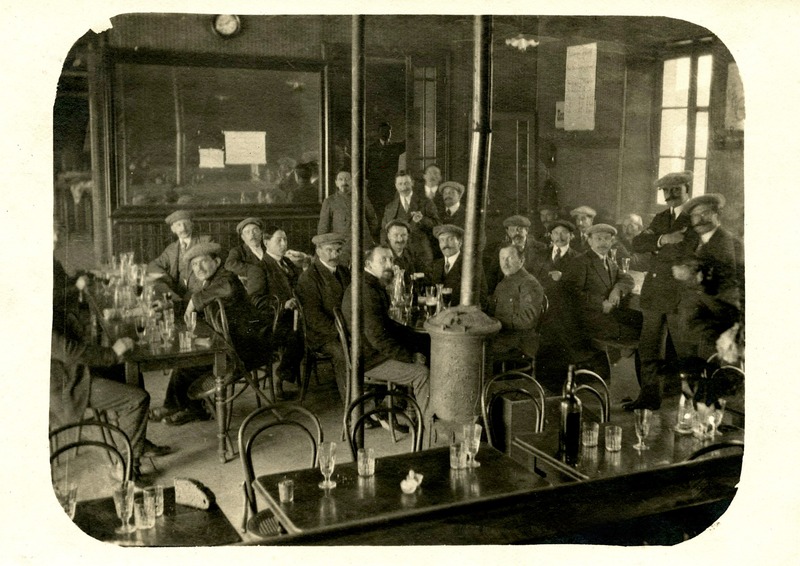
Since the eighteenth century, Flemish people had gathered in these popular cafés todrink, smoke, and play. Traditional Flemish games reigned supreme : the froggame, Flemish bourle, and billiard Nicolas (invented in 1895, a skill gamewhere players blow on a ball using an air bulb). These wooden games, crafted from oak and beech, formed part of the region's living heritage.
When French aristocratic billiards—this noble, technical, prestigious game—arrived in Northern estaminets in the mid-nineteenth century, it didn't land in foreign territory. It naturally integrated into this preexisting gaming culture. Estaminets already featured skill games, betting, and clientele accustomed to paying to play. Billiards simply became the premium game within this ecosystem : more expensive, more technical, more time-consuming, more prestigious than the frog or bourle.
Fifth decisive layer : massive social phenomenon. In this working-class region undergoing rapid urbanization, there was one café for every 50 inhabitants by the late nineteenth century. Each estaminet possessed at least one gaming table. Billiard academies—halls dedicated to serious players—flourished. Every guild—textiles, metallurgy, chemistry—organized its tournaments. Billiards wasn't merely leisure: it was the heart of working-class sociability, between the factory where one toiled for 12 hours and the squalid tenement where one slept.
For CharlesToulet, an established carpenter, this convergence represented a unique opportunity : a local market for several thousand potential billiard tables, available artisanal skills, resources within reach, a complete industrial ecosystem, and a gaming culture that made billiards socially legitimate and desirable.
Developmentand Innovation : Territorial Fidelity
Toulet billiard tables quickly established themselves through their quality. The most prestigious academies, including the celebrated Salle Rameau in Lyon, exclusively chose these tables. The manufactory weathered twentieth-century crises through innovation : integration of metal frames in the 1950s, precision-machined slate beds, optimized rubber cushions.
In 2008, the company made a bold commitment to develop designer models by partnering with the Institut Supérieur de Design de Valenciennes. Billiard tables broke the mold : bold colors, fluid forms, LED integration, extreme customization. Revenue climbed from 1.5 million euros in 2008 to 5 million in 2022. Thecompany earned the prestigious EPV (Living Heritage Company) label in 2010.
Transmissionand Roots : 167 Years in Bondues
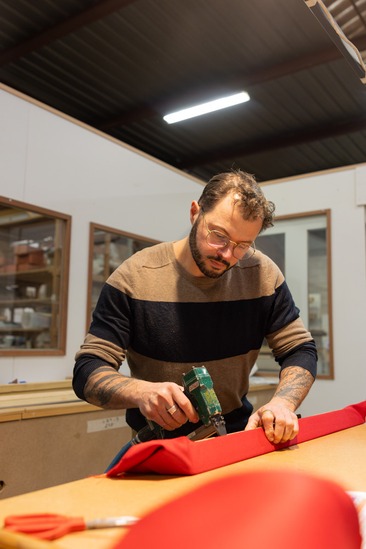
Today, Billards Toulet employs 30 craftspeople in rare professions : cabinetmakers, welders, cloth tailors, slate workers, leather artisans. Every billiard table is manufactured entirely in Bondues. The company generates 30% of its revenuefrom exports in the ultra-luxury segment, yet remains deeply rooted in its original territory.
This loyalty is not sentimental. It is structural. Billards Toulet continues to draw from the resources that gave birth to the manufactory 167 years ago: the ecosystem of specialized subcontractors, the reservoir of regional artisanal expertise, and the legacy of that Flemish gaming culture that made the North the chosen land of billiards in France.