Exclusive cultural experiences
Between Lille, Roubaix, and Tourcoing, a manufactory has found the perfect balance tobecome the discreet essential of French textiles. Here's how a fine thread hastraversed five generations and three centuries of history.
The Foundation: A Strategic "In-Between" (1903)

The Grand Boulevard has just connected Lille, Roubaix, and Tourcoing—three capitals of French textile. At the heart of this golden triangle, in Marcq-en-Barœul, Émile Barrois establishes a small cotton twisting mill. Here, no spinning, no weaving : only that ultra-precise technical gesture of twisting together two or three strands to create sewing thread of exceptional strength.
The location is no accident. Marcq-en-Barœul sits equidistant from the spinningmills of Roubaix-Tourcoing and the garment workshops of Lille. Raw thread arrives from one side, emerges from the other, ready to sew the suits,uniforms, and upholstery fabrics that built the North's reputation. This"in-between" position becomes a strategic asset : supplying all actorsin the textile chain without ever depending on just one.
In 1937,Joseph Toulemonde takes over the business. The name changes, not the philosophy: remain the invisible yet vital link in the textile industry. Fordecades, the machines hum, the spools accumulate—discreet, indispensable.
Resistance and external Growth (1960-2015)
The 1960s mark a turning point. As the North's textile industry falters against foreign competition, Toulemonde diversifies. Joseph and Didier Toulemonde invest inmodern double-twisting machines, explore new markets : Calais and Caudry lace,medical compression stockings, aerospace, automotive. Thread becomes technical,almost scientific.
In the1980s, Bruno Toulemonde (4th generation) takes the helm and adopts a boldstrategy: external growth. 1998, acquisition of Texmonde (sewing thread). 2000,purchase of Barrois-Toulemonde (threads for lace and weaving). 2015, Lebaufil (elastic and metallized threads) joins the group. But the masterstroke comes in2007.
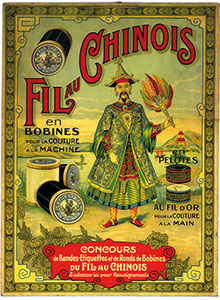
That year, Maison Vrau, founded in 1816 in Lille by François-Philibert Vrau, teeters onthe brink of liquidation. With it risks the disappearance of Fil au Chinois, aniconic brand created in 1847 by Philibert Vrau, a philanthropic industrialistwho employed 1,100 workers and co-founded the Catholic University of Lille.This thread, with its exotic name inspired by nineteenth-century Orientalistfascination, has sewn generations of trousseaus, embroideries, and hautecouture pieces. Bruno Toulemonde acquires everything: the century-old machines,the manufacturing secrets, the soul of 191 years of history.
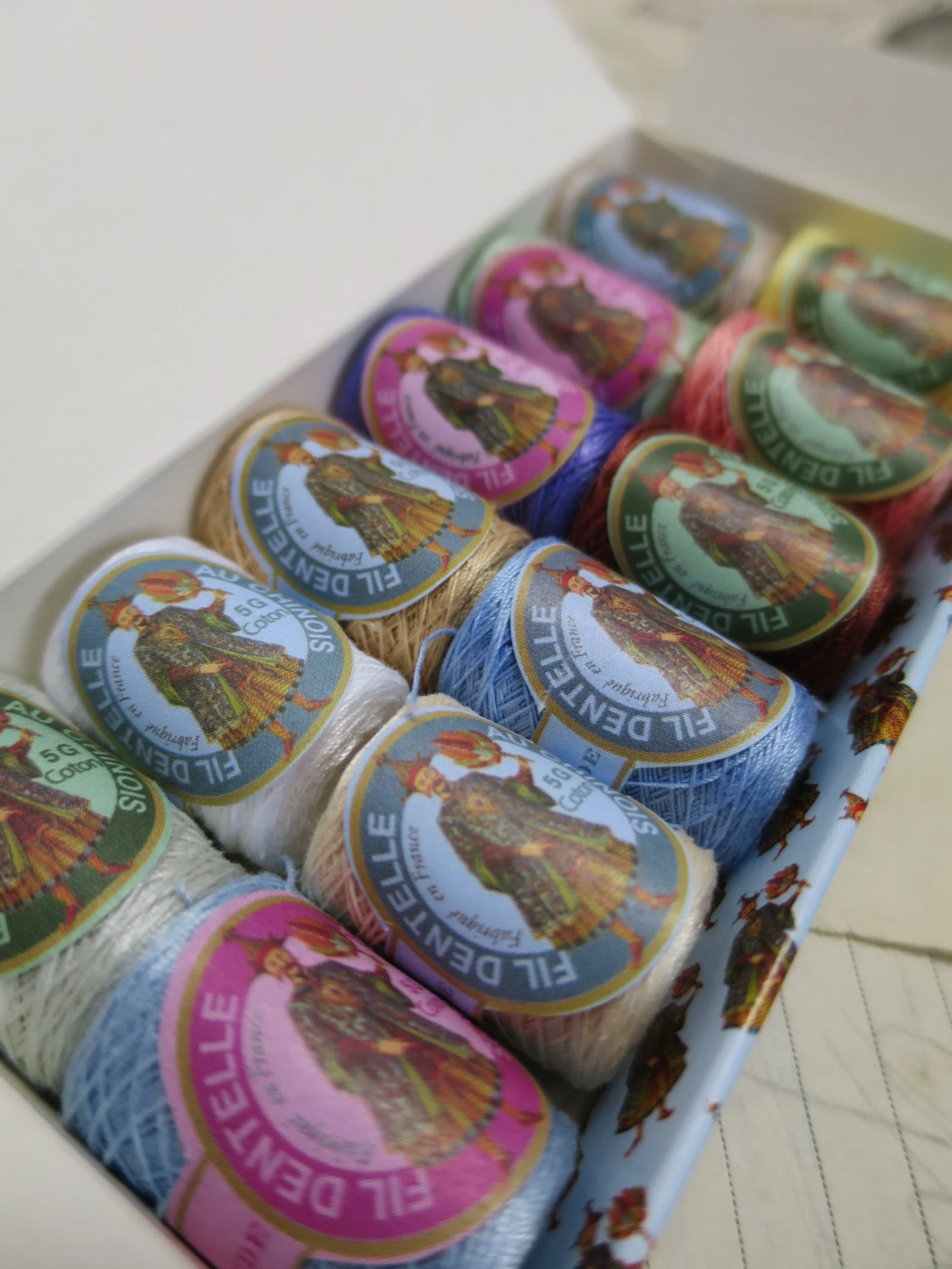
Fil au Chinois is reborn in Marcq-en-Barœul. Its iconic Cocons Calais—110-meterspools of 3-ply twisted cotton—return to service, manufactured on the same antique machines, with the same secret expertise. French notions breatheagain.
Transmission and today : Discreet Excellence
Today, Louis and Antoine Toulemonde (5th generation) run the company from the twohistoric sites in Marcq-en-Barœul and Bondues. Fifty employees perpetuate arare expertise: ultra-fine twisting of Egyptian cotton, the fruit of a 60-yearpartnership with an exclusive supplier.
The clients ? Ultra-luxury leather goods workshops, embroiderers at Parisian HauteCouture ateliers, Calais lacemakers, niche markets in medical, aerospace, and automotive. A quarter of revenue goes to exports. Two hundred clientsworldwide. The Living Heritage Company label validates this discreetexcellence.
Why Marcq-en-Barœul? Because here, between three textile cities, a thread could become both invisible and indispensable. Because an "in-between"position is sometimes the strongest. Because in 2007, one man understood that a177-year-old thread should never break.
Fil au Chinois still runs. Discreet, resilient, French. Like Toulemonde.