Exclusive cultural experiences
Iconic products:
When resilience forges excellence
Prologue : 1894, The Year It All Begins
Lomme, a Lille suburb in the throes of industrial effervescence. Factory chimneys belchsmoke from textile mills. Workers pour in by the thousands. Lille-Roubaix-Tourcoing stands as one of Europe's economic powerhouses.
In this context of frenzied expansion, a young man from the Netherlands makes a bold decision. Théophile Winckelmans, son of textile merchants, knows the North'seconomic fabric intimately. He senses that a booming industry needs durable, resilient, elegant flooring.
He opens a stoneware tile manufactory. A then-cutting-edge technology, a noble material, vitrified at high temperature, colored throughout. The Winckelmans adventure has just been born.
Why the North? A Territory Blessed by the Gods of Industry
In 1894, choosing Lomme is no roll of the dice. It's a carefully considered strategic decision.
An exploding market
The Lille metropolis builds at a breakneck pace : factories, warehouses, workers' housing, infrastructure. Demand for durable flooring explodes. Textile manufactory floors must withstand machinery, humidity, incessant foot traffic. Vitrified stoneware answers these constraints perfectly.
An exceptional transportation network
The North boasts a dense railway network. Historical evidence proves it : during World WarII, the Winckelmans factory was bombed by the Allies precisely because it connected to rail lines—strategic infrastructure to destroy to slow the Germanadvance. These rails enable the supply of clay and fuel (coal from the miningbasin), and rapid product distribution.
Accessible raw materials
The mining basin of Nord-Pas-de-Calais harbors quality clays and abundant fuel : coal, indispensable for the high-temperature kilns necessary for stoneware vitrification.
Skilled labor
Since the Middle Ages, the North has maintained a manufacturing tradition. Workers master technical gestures and production rhythms. Winckelmans can recruit locally.
A fertile entrepreneurial ecosystem
Industrial bourgeoisie, financing networks, family business culture : the capitalist terrain is ideal for birthing and nurturing an ambitious manufactory.
Result : Théophile Winckelmans plants his manufactory at the heart of an ecosystem that multiplies his chances of success.
Resilience Incarnate : Two Destructions, Two Rebirths
1914-1918 : The Great War Strikes

The North becomes a combat zone. The Winckelmans factory, like thousands of industrial infrastructures, suffers partial destruction during World War I. Broken machines, collapsed buildings, production interrupted yet disrupted.
But the Winckelmans family does not bend. After the war, despite massive destruction, despite human losses, they rebuild. Stone by stone. Kiln by kiln. The manufactory rises from its ashes.
1944 :The Deluge of Fire
June 6,1944: the Allied landing unleashes a new tempest over Northern France. To cut German supply lines, Allied bombers target railway infrastructure. The Winckelmans factory, connected to the rail network for raw material supply, is annihilated a second time.
Bombs raindown. Workshops collapse. Production ceases abruptly.
And yet...
The family rises again. With unshakeable determination, they launch a new reconstructionproject. More modern, more robust. Little by little, workshop by workshop, the factory is reborn on its original site in Lomme. The same place, the same passion, the same standards.
Innovation within Tradition : 130 Years Later, what Remains of 1894?
Everything. A legacy and the spirit of innovation.
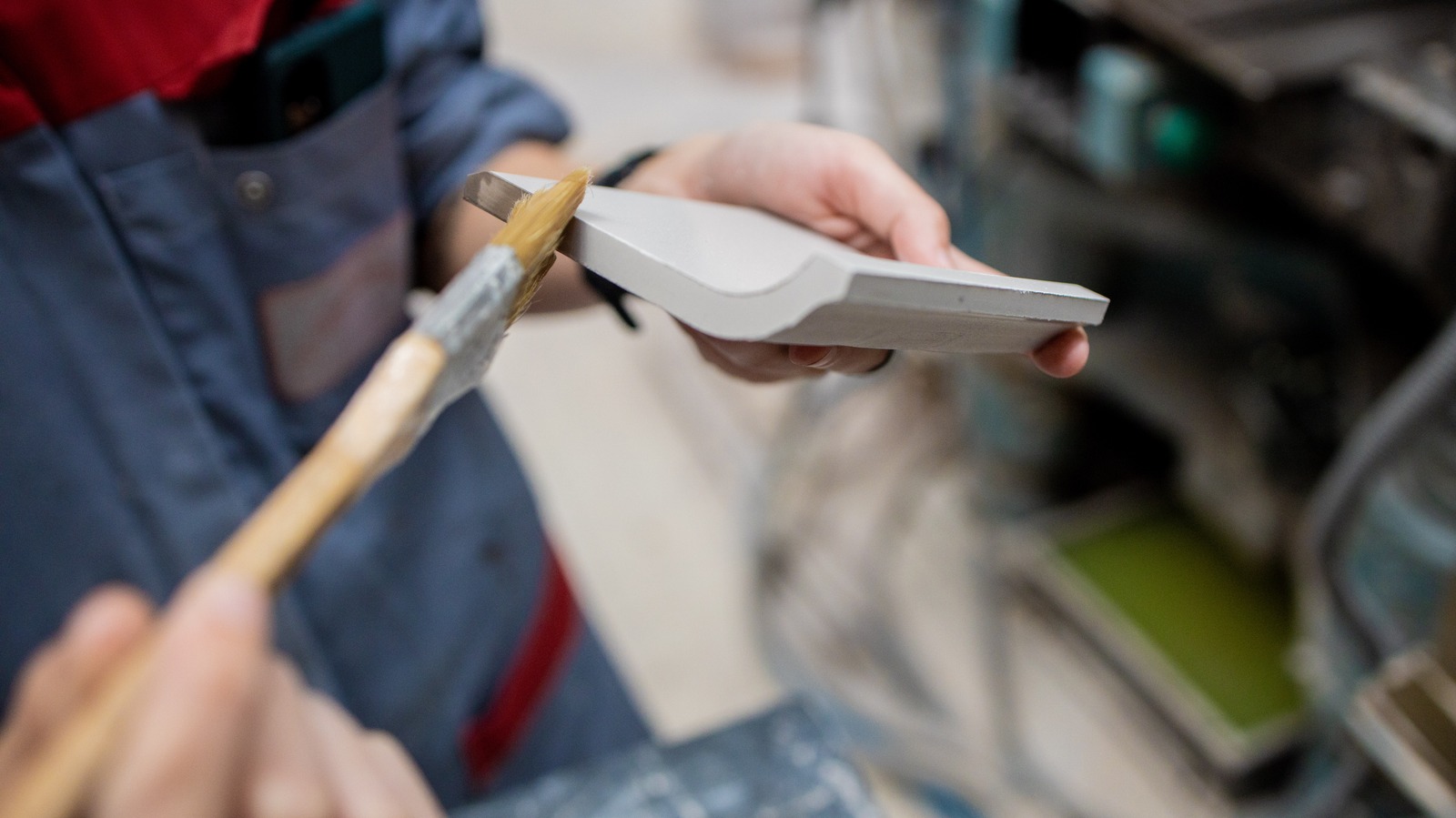
A legacy, because manufacturing methods haven't changed. Winckelmans refuses the shortcuts of mass production. Where competitors cut shapes from large slabs, Winckelmans uses a unique mold foreach tile format. Result: unparalleled mastery of the centuries-old art offire, impeccable finishing.
The spirit of innovation, because the company has continuously reinvented itself to stay in the race.
The Pillars of Excellence That Have Driven Winckelmans' Success from the Beginning
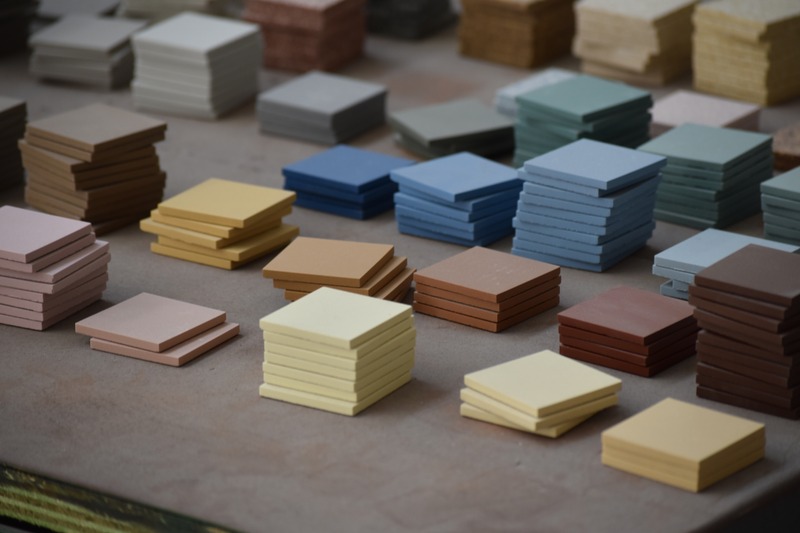
Vitrified stoneware is an exceptional material. Composed of clays, sands, and quartz,fired at very high temperature, it has porosity under 0.5% (ideal for kitchensand bathrooms), it's resilient (withstanding intensive traffic, impacts,thermal variations), and it's colored throughout (guaranteeing color stabilityover time). With 32 solid colors and 34 formats, the compositionalpossibilities are virtually infinite for architects and designers.
130 employees work daily in the Lomme factory and at the brand's Burgundy site. Natural materials, short supply chains, controlled carbon footprint. In an ageof globalization, Winckelmans bets on qualitative localism.
Strategic Lessons from an IndustrialSuccess Story : resilience isn't survival, it's transformation
After each destruction, Winckelmans didn't simply rebuild identically. The company seized the opportunity to modernize, optimize, strengthen. Resilience means bouncingback stronger.
Innovation doesn't betray tradition, it elevates it
Winckelmans never abandoned its ancestral methods. But it successfully integratedcontemporary tools: showroom boutique, 3D visualization, digital presence,export expansion. Innovate within tradition, not against it.
Epilogue : Winckelmans, metaphor for a French Industry that endures
How many companies can boast of having survived two world wars, two total destructions,and still being here, stronger than ever?
Winckelmans is far more than a tile manufactory. It's a symbol.
The symbol of a French industry determined to endure.
The symbol of artisanal expertise that stands up to mass production.
The symbol of a family that, generation after generation, chooses excellence over ease.
In Hauts-de-France, a land of industries weakened by economic transformations, Winckelmans proves it's possible to conjugate heritage and modernity, traditionand innovation, local and international.
130 years. Two wars. Unwavering resilience.
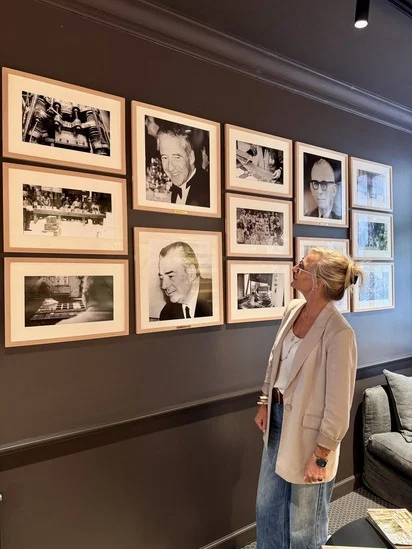
Winckelmans, a legendary manufactory and Living Heritage Company, is today led by Barbara Winckelmans, fifth generation of the founding family.